

By Mandla Dlamini
Johannesburg’s climate has long been characterised by pronounced seasonal swings: balmy, storm-prone summers with most of the city’s rainfall, and crisp, dry winters that bring cold nights and clear skies. At about 1,750 metres above sea level, the Highveld position means the city avoids coastal humidity but feels dramatic altitude effects daily.
Summer versus Winter: What to Know
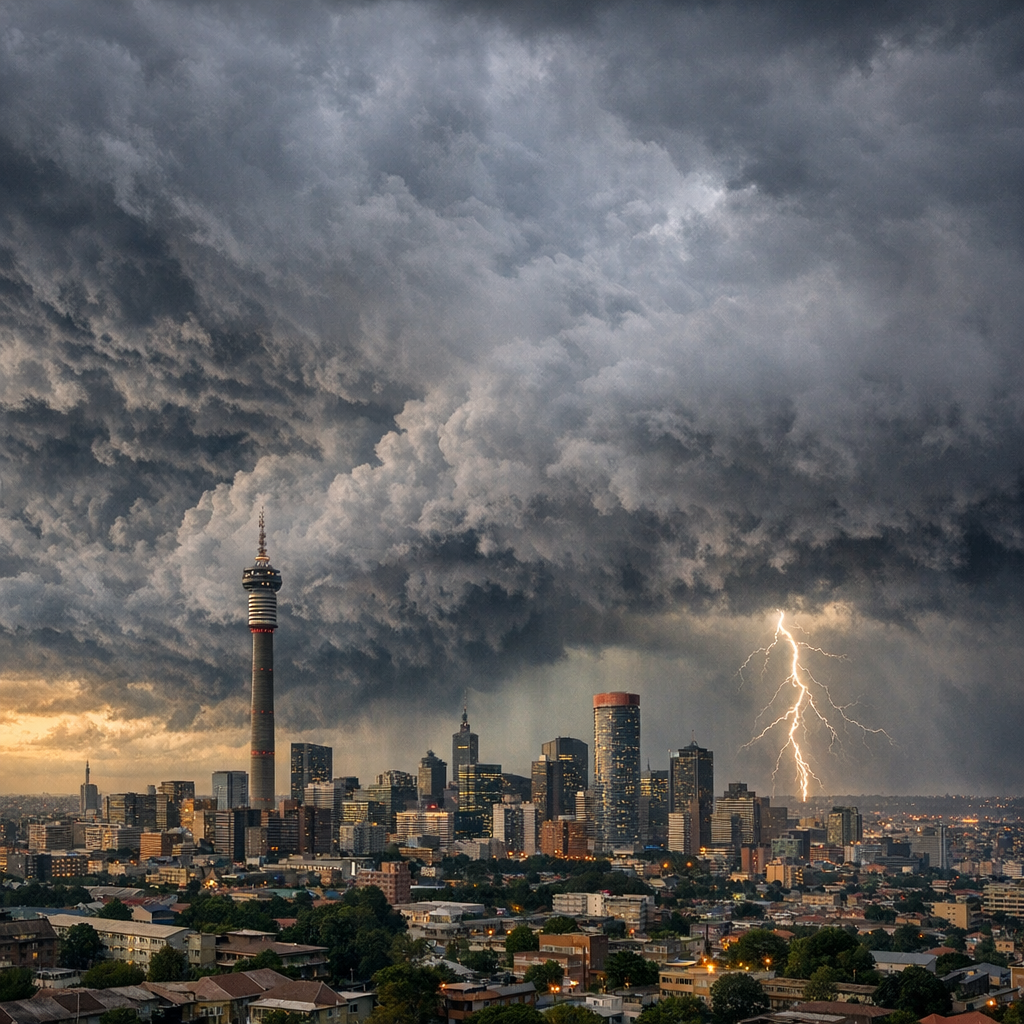
Summer (roughly October to March) sees highs regularly over 25 °C, and frequent afternoon thunderstorms which cool things down briefly but also dump large volumes of water. December tends to be the wettest month, with upwards of 120–130 mm of rain.
Winter (June through August) brings dry weather, much cooler nights—often dipping close to or below freezing—and daytime highs in the mid-teens. Rainfall drops off sharply; for example, July normally gets just a few millimetres.
Shifting Patterns: Climate Change & Rainfall Variability
While Johannesburg has always experienced variability in rainfall year-to-year—often linked to regional phenomena like El Niño or La Niña—recent data shows an overall decline in annual precipitation. For example, average rainfall dropped from over 820 mm in the early 1980s to about 626 mm in 2023, though extremes in wet years still occur.
The beginning of summer rains is arriving later, and when they come they tend to fall harder in shorter bursts. These downpours strain stormwater infrastructure and contribute to flash flooding in parts of the city that were not designed for intense rain.
Urban Heat, Cold Nights, & Health Impacts
Johannesburg’s urban heat island (UHI) effect means built-up areas often stay warmer at night compared to surrounding rural zones. This helps cushion cold snaps but worsens heat stress during hotter periods.
Meanwhile, cold winter nights—sometimes falling to around 0 °C or slightly below—can lead to frost or icy conditions in vulnerable areas without adequate heating or shelter.
What Residents Can Do
- Monitor weather forecasts especially in summer afternoons and keep umbrellas or waterproof gear at hand.
- In winter, plan for large temperature shifts between day and night—layering clothes helps and protect exposed plumbing and pipes.
- Support or advocate green infrastructure (like permeable pavements, tree planting, rain gardens) to reduce flood risk and help cool built-up areas.
- Conserve water year-round: during dry periods, being mindful about usage helps ease pressure when supplies are low.
- Stay alert during extreme weather: thunderstorms, heavy rain, or unexpected cold nights, especially if you live in drainage-vulnerable or low-lying zones.
Tending to Tomorrow: The Environment & Our Future Weather
Johannesburg’s climate is not static. Ongoing warming trends mean more heat, more intense rainfall events, and possibly shifts in rainfall timing. City planners and residents alike need to be prepared for these ripple effects: flooding, water shortages, infrastructure strain.
Environmental resilience—protecting wetlands, trees, open space—is more than a green ideal. It’s practical insurance.
In short: knowing what to expect, where shifts are happening, and how our built environment reacts is key. Johannesburg’s beauty lies in its seasons—but they’re now less predictable than ever.