

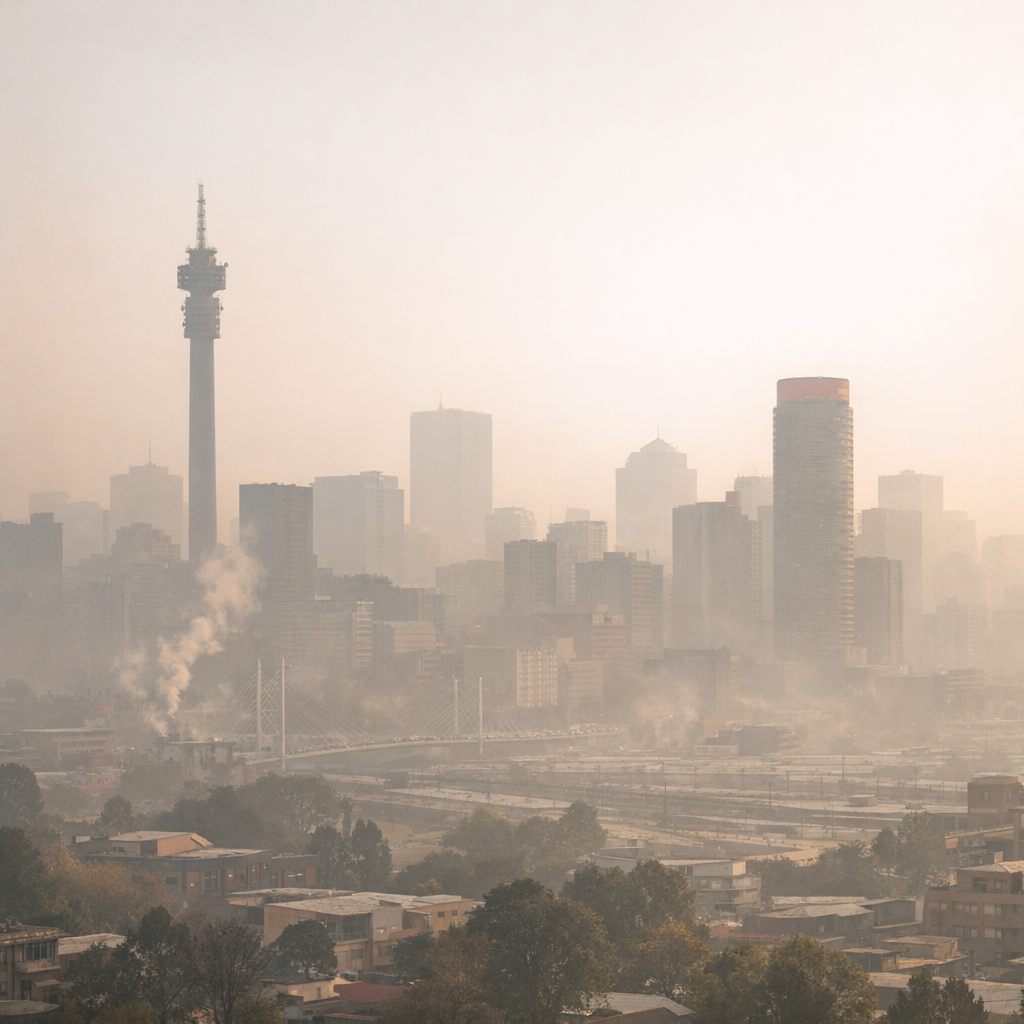
Johannesburg, situated on the Highveld plateau, experiences a subtropical highland climate characterized by distinct seasons and notable environmental challenges.
Climate Overview
The city enjoys a sunny climate, with summer months (October to April) featuring hot days followed by afternoon thundershowers and cool evenings. Winter months (May to September) are marked by dry, sunny days and cold nights. Average high temperatures range from 25.6°C in January to 16°C in June, while average lows vary from 14.7°C in January to 4.1°C in June and July. Snowfall is rare, with notable occurrences in May 1956, August 1962, June 1964, and September 1981.
Environmental Challenges
Air Pollution
Johannesburg faces significant air pollution issues, primarily due to industrial emissions, power plants, and the burning of biomass fuels. Industrial activities, especially in neighboring provinces like Mpumalanga, contribute substantially to the city’s air pollution. The city’s topography often traps pollutants, leading to episodes of poor air quality.
Water Pollution
The city’s rivers, including the Jukskei and Klip Rivers, suffer from pollution due to failing sewage systems, rapid urbanization, and industrial waste. A December 2025 WaterCAN report tested 59 water sources across Gauteng and found 39 were unsafe for human consumption.
Infrastructure Challenges
Johannesburg’s water infrastructure is under strain, with leaking pipes, burst mains, and failing treatment plants leading to significant water losses before reaching consumers. In certain areas, prolonged outages have become common, forcing residents to depend on alternative water sources.
Community Concerns
Residents have expressed growing concern over the city’s environmental issues. A survey conducted with over 3,000 participants revealed that 92% of respondents are concerned about air pollution, and 78% believe it negatively impacts their health.
Understanding Johannesburg’s climate and environmental challenges is crucial for developing effective strategies to improve the city’s environmental health and the well-being of its residents.