

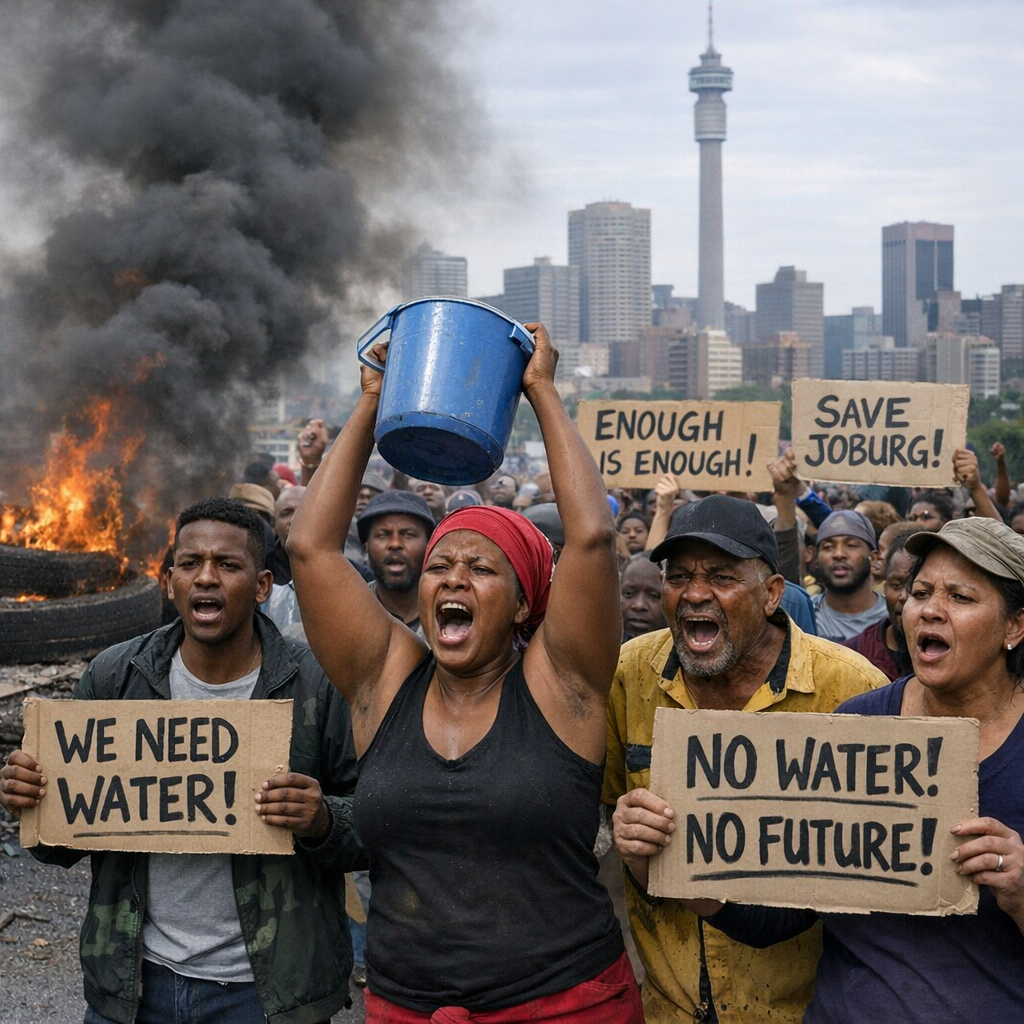
Johannesburg, South Africa’s economic hub, is facing a series of service delivery challenges that have significantly impacted its residents. From water shortages to infrastructure decay and safety concerns, communities are calling for urgent action.
Water Shortages and Infrastructure Decay
Many suburbs, including Coronationville, Westbury, and Sophiatown, have experienced prolonged water supply disruptions. Residents report difficulties in performing daily activities such as cooking, cleaning, and bathing. The aging infrastructure, with outdated reservoirs and pipes, has been identified as a primary cause of these shortages. The Hursthill, Brixton, and Crosby reservoirs are in dire need of refurbishment, with completion dates not expected until October 2026. Source
Safety and Security Concerns
Crime rates in areas like Jeppe, Johannesburg Central, and Hillbrow have seen sharp increases in recent years. Approximately 85% of inner-city residents report feeling unsafe walking at night. This rise in crime has been linked to deteriorating infrastructure and inadequate law enforcement. Source
Community Voices
Residents have expressed their frustrations through protests and community meetings. In September 2025, residents of Coronationville and Westbury took to the streets, demanding immediate action from city officials to address the water crisis. The demonstrations highlighted the community’s desperation for reliable basic services. Source
City’s Response
The City of Johannesburg has acknowledged these challenges and has initiated plans to address them. A R32 billion water infrastructure plan over the next decade aims to replace pipes and improve reservoirs. However, some areas may continue experiencing disruptions for months while upgrades take place. Source
Residents are hopeful that these initiatives will lead to tangible improvements, but many remain skeptical, emphasizing the need for transparency, accountability, and timely execution of these plans.