

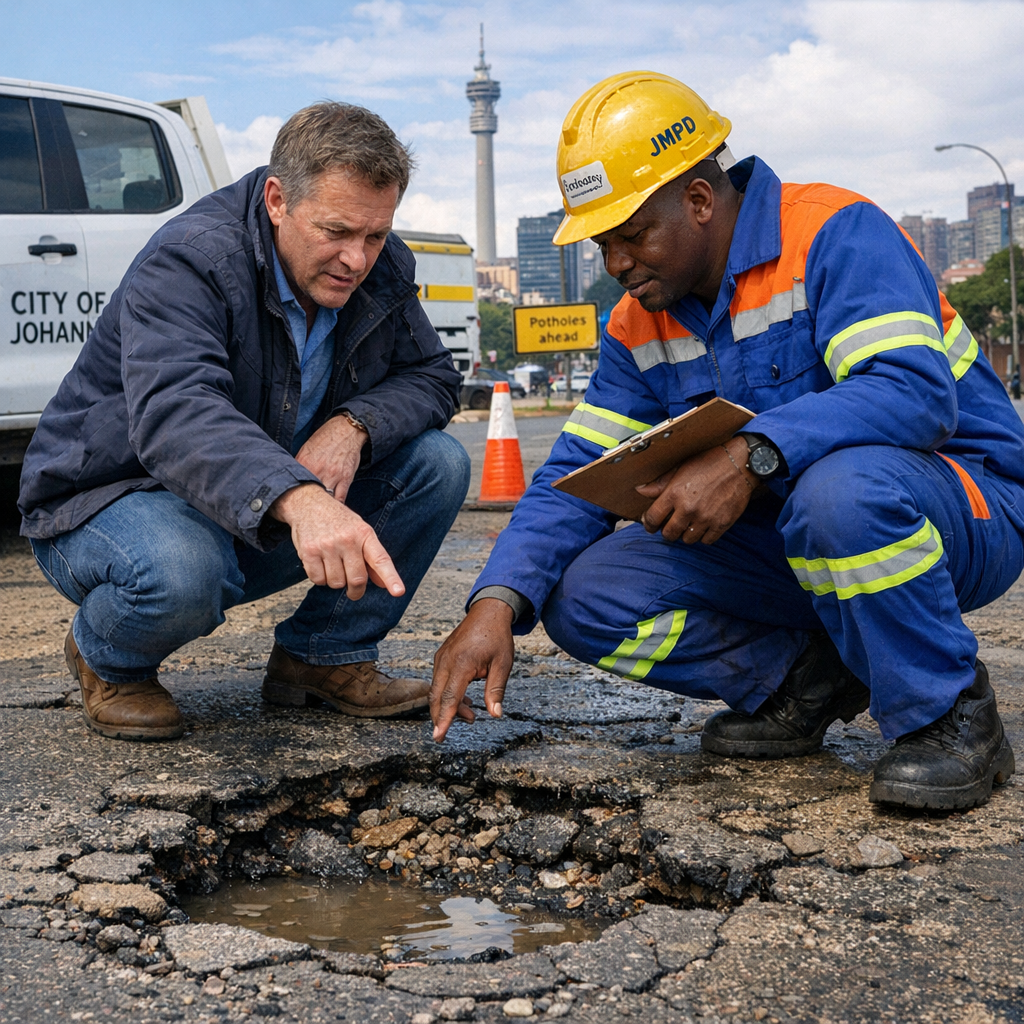
Johannesburg is deep in a financial squeeze that’s now hitting everyday life. With just 12 days of cash on hand, the City is struggling to pay contractors, maintain roads, keep traffic lights working, and ensure consistent utility service. Though local leadership remains optimistic, a closer look reveals a different reality.
Why is this happening?
The City’s troubles stem from systemic failures. Key departments such as Johannesburg Water and City Power are losing a large portion—between 30%–42%—of what they purchase because of burst pipes, vandalism, theft, and aging infrastructure. At the same time, unpaid debts have piled up against Eskom, Rand Water, and numerous contractors.
How it’s affecting residents now
- Roads won’t be repaired: Fuel shortages grounded major repairs by the Johannesburg Roads Agency, delaying fixes to potholes and traffic signals.
- Water disruptions: Failures at critical nodes like the Eikenhof substation have already caused interruptions for a large portion of the city. Delayed infrastructure upgrades mean these breakdowns happen more often.
- Public institutions strained: Service providers—from refuse collectors to maintenance crews—are being paid late. Projects, even urgent ones, stall.
- Communication breakdowns: Some city departments can’t even make or receive official calls due to unpaid phone service bills. Important points of contact for residents are disrupted.
What the City says
Mayor Dada Morero acknowledges pressures but insists the City’s financial management hasn’t spiraled beyond repair. The City has leaned on grants from the National Treasury and is trying to address the root causes of budget strain.
What residents can expect—and do
While short-term improvements won’t be instant, this is what people can watch for and how to prepare:
- Prepare for irregular service: Water and electricity disruptions may increase, especially in outer areas already vulnerable.
- Delay non-essential work: Infrastructure projects like road resurfacing or non-emergency planning might be delayed. Plan accordingly.
- Keep records: Document service disruptions—dates, times, areas. Use these when raising issues with council or service provider offices.
- Engage through local forums: Attend ward meetings, contact your councillor. Transparency tools like service-reporting apps help make complaints visible.
Johannesburg residents are no strangers to inconvenience—but the current crisis differs. It’s not just about potholes or summer outages. These disruptions are signs of deeper instability. And while political leaders may be turning to grants and emergency funds, the long-term fix depends on stable funding, stronger oversight, and better infrastructural maintenance. Families and communities will be paying attention: because every day without reliable water, roads, and power chips away at not just comfort, but dignity.