

By Lerato Mabaso
Broken Pipes, Drained Wallets
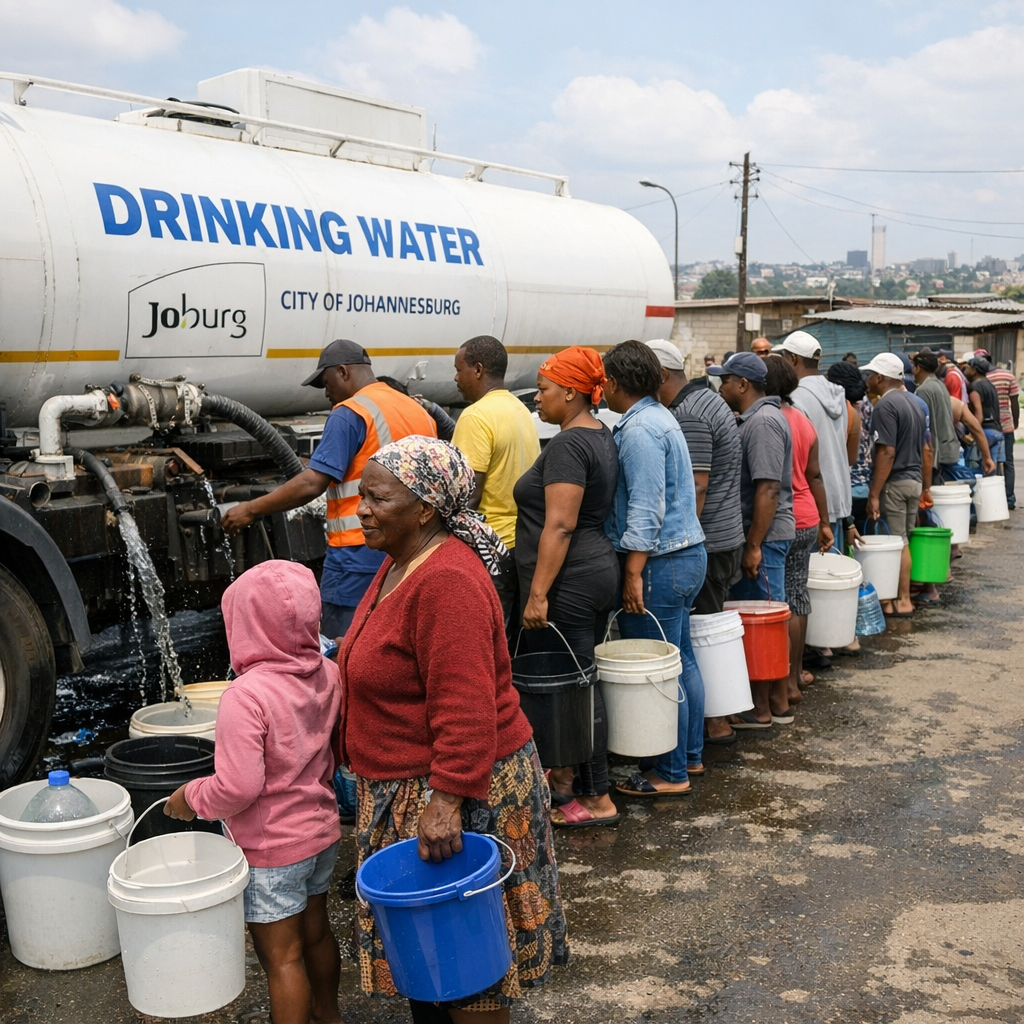
Johannesburg’s water supply woes have escalated in recent months. Persistent leaks, frequent power interruptions, and inadequate bulk supply are leading to long stretches without reliable water in high-lying suburbs like Sophiatown, Melville, Westbury, Coronationville and Lehae. Residents report taps running dry, households relying on tankers, and uncertain restoration timetables at every burst pipe. Johannesburg Water now estimates that nearly half of the water it buys is lost due to leaks or theft—levels well above internationally acceptable thresholds.
Financial Strain and Infrastructure Delays
The crisis worsens outside the pipes. Johannesburg Water, the entity responsible for maintaining and supplying water, saw its accounts depleted when R3.4 billion was transferred out by the City of Johannesburg in June. Projects to repair reservoirs in Jabulani, Ennerdale, Meadowlands and Alexander Park were immediately disrupted. Without steady finances, contractors can’t be paid, and essential upgrades stall.
Community Impact and Government Response
In areas like Lehae’s higher elevations, people say they’ve gone days or even weeks without access to municipal water, particularly affecting vulnerable groups—seniors, caregivers, clinics, schools. Doornkop residents voiced concerns over disruptions to funerals and schooling at recent civic engagement sessions. Officials admit that a recent pipeline incident at Rand Water momentarily disrupted supply across larger regions.
To stabilise supply, Johannesburg Water has deployed measures like ring-fencing revenue, rolling out standby tankers, installing standpipes, and throttling supply in less affected areas so that severely hit zones receive priority. Still, City Power’s deferred upgrades to key substations—especially Eikenhof, which feeds over half of the city—mean outages and low pressure remain risks.
What Residents Can Do
While structural fixes may take time, local households can ease the strain through stricter water conservation—shorter showers, avoiding outdoor hose use, repairing leaking taps, and collecting and storing water when available. Engage with ward councillors and Joburg Water to stay informed about outages and relief measures. In communities where tankers or standpipes are deployed, establishing fair and transparent sharing systems ensures resources reach those most in need.
Looking Ahead
Without urgent intervention, Johannesburg risks deeper strain: escalating project delays, worsening losses, and growing inequality in water access. Financial transparency, infrastructure investment, and stronger oversight are essential. Water isn’t just infrastructure—it’s the foundation of daily life, safety and wellbeing across the city. Joburg needs stability in its pipes and its books.